Roofing Felt Explained: Shed, Self-Adhesive and Torch-On — 2026 Costs and When EPDM Wins
"Felt" covers three quite different products that happen to share a name — from the £25 shed roll you can fit in an afternoon to torch-applied systems that protect extensions for decades. Choosing the wrong one for the job is the classic flat-roof mistake, and it's why so many garage roofs get re-done twice. Here's the honest map for 2026.
In short: Shed felt (nailed mineral bitumen, 5–15 years) is DIY territory at roughly £24–£26/m² in materials. Self-adhesive felt (peel-and-stick, 15–20 years) is the flame-free middle ground. Torch-on felt (gas-torch applied, 15–30+ years) is professional work at around £40–£80/m² installed. And on garages and extensions, EPDM rubber at £70–£120/m² installed with a lifespan up to 50 years increasingly wins the long game.
The three felts, honestly compared
| Type | Lifespan | Cost | Who fits it |
|---|---|---|---|
| Shed felt (mineral bitumen, nailed) | 5 – 15 years by grade | ~£24 – £26/m² materials | DIY — hammer, nails, an afternoon |
| Self-adhesive felt (peel-off backing) | 15 – 20 years | mid-range materials | Confident DIY — no flame involved |
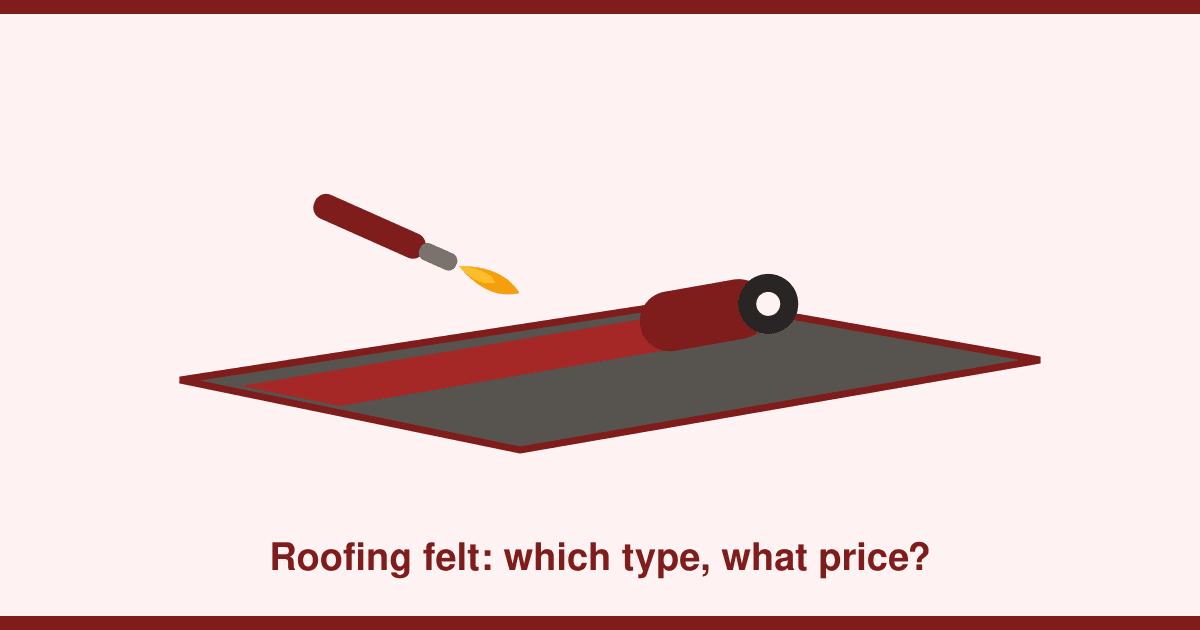
| Torch-on felt (polymer-modified bitumen, 2–3 layers) | 15 – 30+ years | cap sheet £5 – £8/m² materials; ~£40 – £80/m² installed (average ~£65) | Professional — open-flame work |
The grade note matters for sheds: standard green mineral felt sits at the 5-year end, while polyester-reinforced "super" grades reach 15 — the price difference per roll is small, the re-roofing labour it saves is not.
Torch-on: good system, wrong hands ruin it
Quality torch-on is a legitimate multi-decade roof: two or three bonded layers of polymer-modified bitumen, properly detailed at upstands and edges. Its two failure modes are both human: flame risk (this is gas-torch work near timber — emphatically not DIY) and cheap installs that skimp layers or details, which is where the 10-year felt horror stories come from. If you're getting quotes, layer count, edge detailing and guarantee terms are the questions that separate real quotes — and the same rogue-roofer warning signs apply here as anywhere.
Felt or EPDM — the garage-roof maths
For sheds, felt wins on simplicity and cost, full stop. For garages, extensions and anything you don't want to think about again, run the numbers:
- Felt replacement: £40 – £80/m² installed, lasting 10 – 20 years in practice.
- EPDM rubber: £70 – £120/m² installed — a single seamless membrane on smaller roofs, lasting up to 50 years with minimal maintenance.
Pay roughly half as much again, get two to three times the lifespan: over the life of the building, EPDM frequently works out cheaper than felting twice. Felt keeps the advantage on tight budgets, complex detailing, and where the existing deck won't justify a premium membrane — the full comparison including GRP fibreglass is in our flat roof options and costs guide.
Fitting shed felt properly (the 20-minute masterclass)
- Strip the old felt completely — never felt over felt; trapped moisture rots the deck below.
- Check and refix the boards: proud nails and soft board sections get fixed now or telegraph through the new felt by winter.
- Work up-slope: first run along the eaves, overlaps of at least 75mm, each upper sheet overlapping the lower — water must always step down onto felt, never into a joint.
- Nail at close centres with galvanised clout nails, fold and cap the verges neatly, and seal overlaps with felt adhesive on exposed sites.
- Do it on a warm, dry day: cold felt cracks when folded, wet decks trap the problem you're covering.
The gutter footnote: Half of "failed felt" call-outs are actually failed drainage — blocked or sagging gutters ponding water against the roof edge. Before blaming the membrane, check the gutters; it's the cheapest roof repair there is.
The bottom line
Match the felt to the building: nailed mineral felt for sheds (buy the reinforced grade), self-adhesive for flame-free small jobs, professional torch-on where a felt system genuinely fits — and on garages and extensions, price EPDM before recommitting to felt, because the 50-year membrane usually wins the second look. Find vetted flat-roof specialists near you here.
Frequently asked questions
Three main types: shed felt (nailed mineral bitumen, 5–15 years by grade, DIY-friendly), self-adhesive felt (peel-and-stick, no flame, 15–20 years) and torch-on felt (polymer-modified bitumen applied with a gas torch in two or three layers, 15–30+ years, strictly professional work).
Shed felt runs about £24–£26 per m² in materials including fixings. Torch-on cap sheet costs £5–£8 per m² in materials, with professional installation averaging around £65 per m² and felt replacement generally £40–£80 per m² installed.
Usually over the long term: EPDM costs £70–£120 per m² installed against £40–£80 for felt, but lasts up to 50 years versus felt’s realistic 10–20 — often making it cheaper than felting twice. Felt keeps the edge on tight budgets and complex detailing; sheds remain straightforward felt territory.
Yes — it is a genuine DIY job with nailed shed felt: strip the old felt completely, fix the deck, work up-slope with 75mm overlaps, nail with galvanised clouts and finish the verges neatly on a warm dry day. Torch-on felt, by contrast, involves open-flame gas work and belongs to professionals.